
Some materials in your home’s interior plumbing, including pipes, solder, and fixtures, could contain traces of lead. Stoughton’s water does not have lead present when it leaves our wells, but it can become contaminated as it travels through these plumbing materials.
Due to changes in laws pertaining to plumbing materials, homes that were built prior to 1986 are more likely to have plumbing components that contain high levels of lead. Plumbing fixtures produced before 2013 may also contain higher levels of lead.
When your water sits for long periods of time inside water pipes and fixtures containing lead, some of this lead can dissolve into the water. There are a number of steps you can take to ensure that your water remains safe to drink.
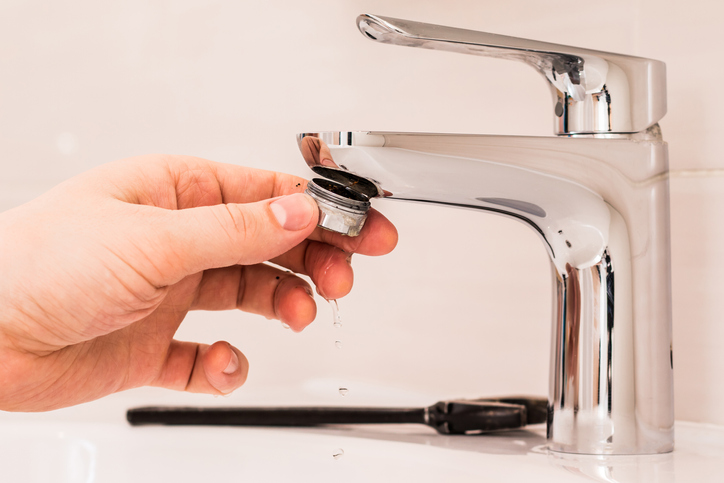 Faucet aerators are placed on faucets to help filter out larger particles that can make their way into your drinking water from sediment in the distribution system or from your interior plumbing materials corroding over time. Small lead particles could be present. Cleaning your faucet aerators regularly is important to remove these particles from your drinking water.
An aerator is a device that is attached to the end of your faucet. Aerators help to save water and filter out sediment and large particles that can be picked up while your water moves through the distribution system.
Faucet aerators should be cleaned every 6 months to remove any sediment and buildup. If you recently replaced lead pipes or fixtures, you may want to clean them immediately, and then periodically going forward.
Before you get started, gather the following supplies:
|
|
|
|
|
|
Follow these steps to clean your faucet aerators:
- Place a rag over the sink drain to prevent any of the pieces from going down the drain.
- If using a wrench or pliers, wrap masking tape around the aerator to prevent damage and scratches.
- Unscrew the aerator by turning counter-clockwise and separate each part (aerator housing, aerator, and rubber washer).
- Clean the parts by removing any pieces of sediment or debris.
- Soak the parts in white vinegar for a few minutes to remove mineral buildup. Scrub with a toothbrush if necessary.
- If aerator and rubber washer are in poor condition, consider replacing them. Parts can be purchased at your local hardware store.
- Put the aerator parts back together and screw the aerator back on the faucet.
- Repeat these steps for all faucets.
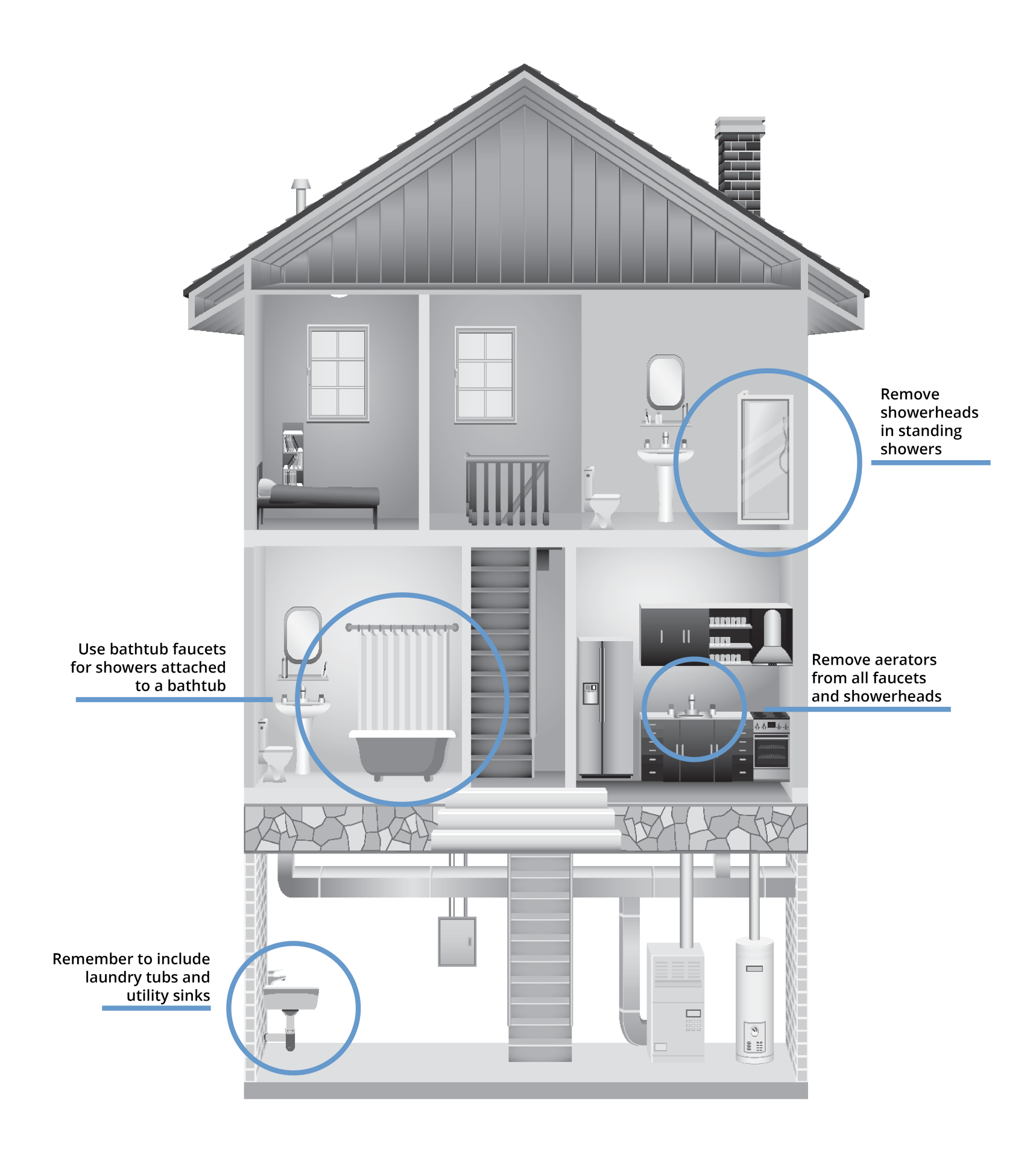 After having the lead service line replaced at your home, small amounts of lead from your old service line may have entered the pipes in your house. To remove this lead, you should flush your home’s plumbing thoroughly starting in the basement and working up through the home. Make sure to use cold water only.
Follow these steps to flush your home’s interior plumbing:
- Locate all of the water faucets in the house where you can run the water without the sink or tub overflowing. Be sure to include laundry tubs and utility sinks. For showers attached to bathtubs, use the bathtub faucet. For shower not attached to bathtubs, remove the showerhead if possible.
- Remove aerators from faucets and showerheads.
- Turn on the cold water faucet all the way, starting in the basement or lowest floor of your home. Leave water running from all faucets at the highest rate possible. Repeat on each floor of your home, moving from the basement up, until all faucets are on.
- Let the water run from all faucets for 30 minutes.
- After 30 minutes, start in the basement or lowest floor of your house and turn off all faucets in the order in which they were opened.
- Clean the aerators and/or showerheads, and put them back on each faucet. Replace old, worn aerators as necessary.
A certified plumber can help you determine if any of your home’s fixtures, pipe fittings, or solder contain lead and if they should be replaced with lead free materials.
You can request a test kit to have the water at your home tested for contaminants, including lead.
(800) 442-4618